

Joint testing at the Applied Superconductivity Laboratory shows NovaWave’s 2511U1 series driver chips cold-starting and switching reliably in liquid nitrogen, a promising step for power electronics in cryogenic and hydrogen-electric aviation systems.
The Applied Superconductivity Laboratory at the University of Strathclyde and NovaWave have completed a joint performance evaluation of NovaWave’s GaN driver chips in a liquid nitrogen environment at an ultra-low temperature of –196 °C (77 K).
Key Results
The 2511U1 series driver chips reliably cold-started and withstood repeated power cycling at cryogenic temperature. During testing, the chips sustained repeated charge-discharge cycling of a 100 pF capacitive load at a switching frequency of 100 kHz while fully immersed in liquid nitrogen.
The chips also successfully controlled and drove Infineon’s CoolGaN series power transistors at the same 100 kHz switching frequency under identical cryogenic conditions. This performance was achieved without any dedicated low-temperature optimization of the driver design, and switching times at –196 °C differed from room-temperature performance by only a few nanoseconds.
Why Cryogenic GaN Matters
As temperature drops, GaN power devices tend to get faster and more efficient: carrier mobility rises and on-resistance falls, so cryogenic operation can actually work in a designer’s favor rather than against it. That’s driving growing interest in cryogenic GaN electronics for applications such as superconducting motor drives for electric propulsion, space and satellite systems, quantum computing control electronics, and superconducting magnets used in MRI, particle accelerators, and fusion research. One area of particular interest is all-electric aircraft that pair hydrogen fuel cells with superconducting motors, where power converters may need to sit right alongside cryogenic propulsion hardware.
Driver chips that can cold-start and switch reliably at liquid nitrogen and even liquid helium temperatures are a key piece of that puzzle. They let power conversion electronics live directly inside the cryogenic environment instead of needing to be thermally isolated from it.
What’s Next
These results support the 2511U1 series as a strong candidate driver component for cryogenic DC/DC and DC/AC converters. The University of Strathclyde and NovaWave will continue characterizing the chip’s physical and electrical properties across a wider range of cryogenic conditions, building on this strong start.
For more information about NovaWave’s cryogenic-capable GaN driver technology, contact info@novawave-power.com.
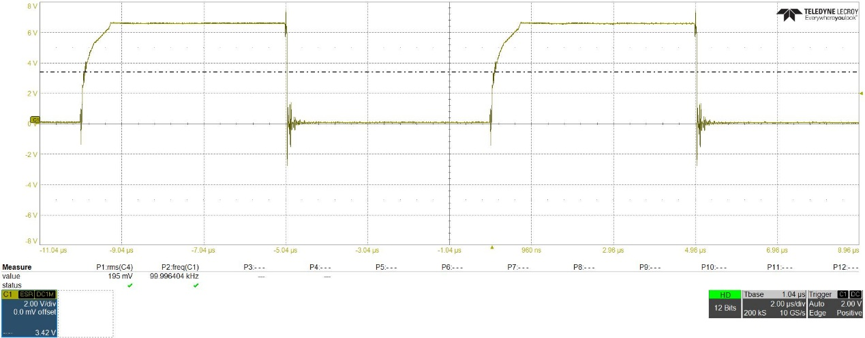
Figure 1. Output voltage waveform at room temperature
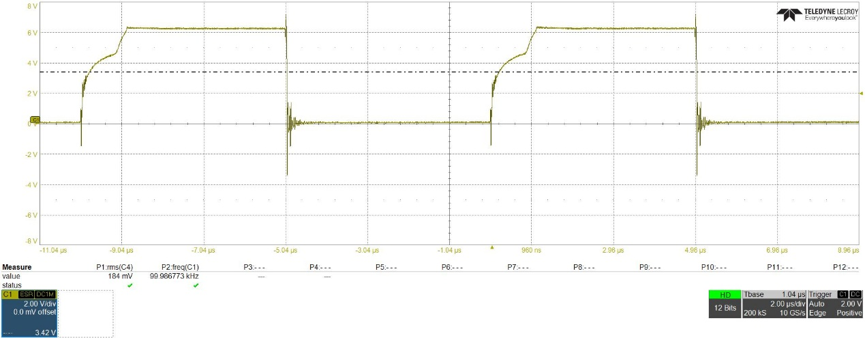
Figure 2. Output voltage waveform in liquid nitrogen (-196 °C)